Throne For Illusions: A Brief Teaching On the Tulku
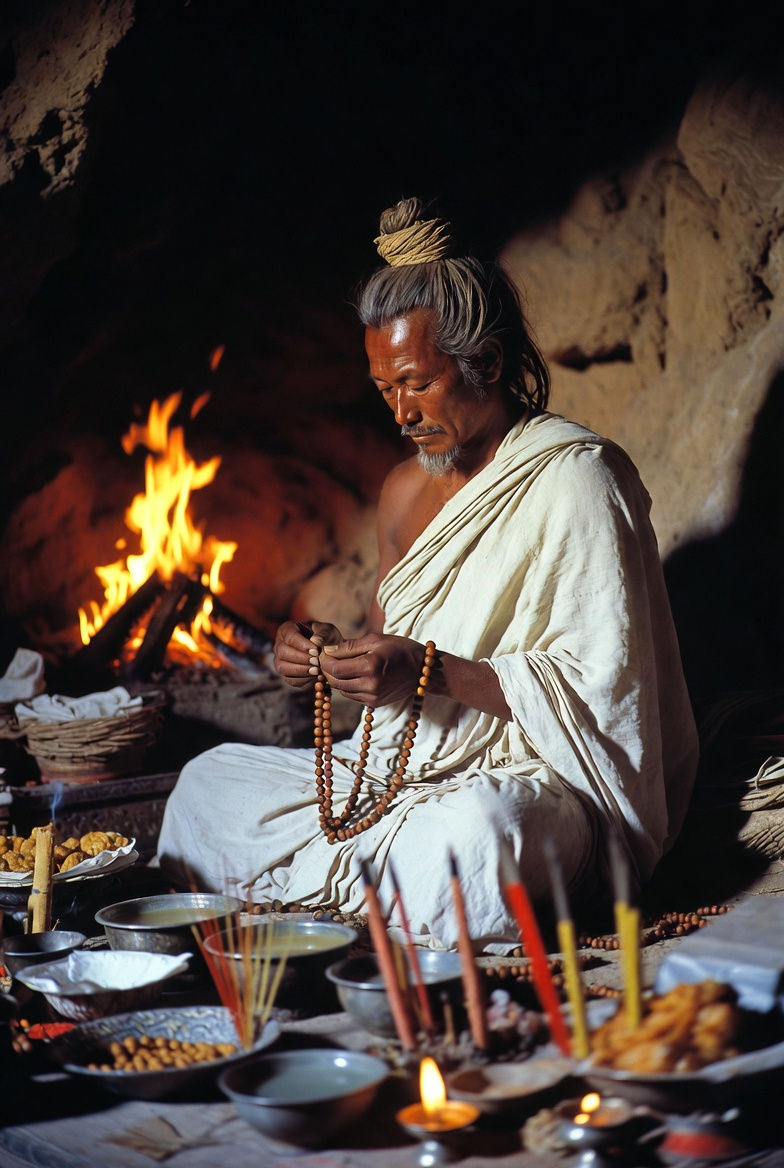
If you have studied and begun to practice Buddha Dharma as it exists in the Tibetan variant of Vajrayana, you have likely come across the term ‘Tulku.’ This is a political office associated with a major monastery that held land and power in a region on the basis of being an embodiment, erroneously called a reincarnation, of some important teacher who is considered to have attained Buddhahood, the freedom from the suffering of mental poisons and negative habits. An enthronement is a public ceremony by which one is announced as a Tulku and invested with some kind of responsibility and authority.
Tulku is the Tibetan translation of the Sanskrit word Nirmanakaya. Nirmana is an illusion, often used in the sense of something that appears as real, but in fact is a trick of the mind, such as an oasis in the desert hallucinated by one deprived of water, or a rope at night appearing as a snake. Kaya is a body or form of being who has passed beyond ignorance, the root cause of suffering. Therefore, Nirmanakaya means ‘The Body of Illusion.’
Though the political dimension is a Tibetan construct, the concept of the Nirmanakaya goes back to the very beginning of Buddha Dharma, when the Buddha Shakyamuni himself taught the reason for his appearance as a human being, and the way in which all Buddhas arise to help those suffering from mistaken ideas. In the Sutra of the Questions of Vidyuprapta, after telling a riveting tale of a Bodhisattva persecuted by a King who then came to repent his actions, it states: “The one who became a Buddha after that was I, myself. The faultless Dharma-teacher, The bhikṣu who was harmed, is the one who will awaken in the future, the Bodhisattva Maitreya.”
In this section he identifies himself as the King who was in error, and the Bodhisattva who forgave him as the next Buddha who will arise in a future world system, Sri Maitreya, the one who teaches endless patience and loving-kindness.
The Buddha Shakyamuni also tells many of his followers of their own activities in past embodiments, as he does in the Surangama Sutra to one of his closest disciples, Ananda, saying: "In the past you have served countless Buddhas in the ten directions, and in each of those, you have shown great Siddhis!”
Therefore, we have established that Nirmanakaya, or Tulku, is not a Tibetan invention, but a part of the activities of all the Buddhas. Now a sensible question arises regarding this recognition between student and teacher, “What is the point of all of this?”
If the goal of the Buddha Dharma is to not deceive oneself in any way, while giving rise to relative and ultimate compassion in all situations and for all beings without exception, than a system by which one is given legal power through the recognition of spiritual importance and hierarchy based on special names and titles and identities would seem to be its very antithesis.
The legal construct erected around the teaching of the Tulku in the Tibetan political construct was for the purpose of ownership. Much like an actual deed for property and land, the name of the Tulku belonged to a family or institution in the way a brand name is carried on for the purpose of marketing and legal copyright. Only the recognized and enthroned Tulku, given the proper seals, could use the name and carry out the functions of the title itself. Thus endless conflicts and wars arose between families and endless deals and underhanded conspiracies to give these legal documents to wealthy sons and keep them locked and sealed as family property. Peerage and aristocracy wore the guise of genuine teachings.
In the construct of Tulku as a Noble Aristocrat, the very purpose is that the personhood of the name, and the individual given the name, are legally bound for the goal of preserving identity and power structures. In the genuine teachings themselves, the goal is to show the illusory nature of identity itself. These purposes are opposed from the very root.
In the former system a young child is stripped from their family and friends, abused and often tortured into becoming a kind of useful fundraising device. Deprived of every decency and necessity of childhood development, many of these young institutional Tulku grow up with major traumas stemming from abuse, and often perpetuate abuse themselves, as it was a major facet of their own upbringing. In the later system, the genuine teaching, recognition of Nirmanakaya is an aid to one’s work for others, and a loving recognition of the qualities seen between the student and teacher. If any idea of ownership is involved, it is not the teachings of the Buddha.
Fortunately, the Munindra, Buddha Shakyamuni, has told us exactly why the Tulku, or Nirmanakaya, is recognized and its purpose in our path. From the Lotus Sutra:
"For the sake of all wandering beings, the Buddhas show different kayas, but these are all just temporary manifestations, for the purpose of teaching Dharma".
The whole point of such recognition is service. The body of a Buddha that appears to aid students and bring beings out of suffering is called illusory because it continues to change and appear only to suit the needs of beings. A Buddha is a shape-shifter of love.
Buddha Shakyamuni did not arise to be recognized as a Buddha, have a high title, to be served, or to lord his position in a political way over others, making himself a sovereign ruler of a state. After all, he was born with that. The Buddha was born a great prince with every need provided and the promise of eventual and total power upon his ascendency.
That is precisely what Shakyamuni Buddha renounced.
It was looking upon the cycle of birth, aging, sickness and death, and all the political maneuverings and class based privilege and oppression that weaves its way through these cycles of time that The Great Teacher abandoned his position to seek the genuine way of things and to help others. When a teacher recognizes a student’s past actions through one or more embodiments in a line of Tulku, this is a way of orienting the student toward service and upholding the banner that was passed to them from the mind and actions of another vow-holder in the past.
Such recognition does not even mean that the student is the same ‘person’ as this teacher from the past, in some continual unbroken self-hood. The teacher is giving the student an inheritance. Except in this case it isn’t riches, land, or political titles - the inheritance is serving others at the expense of their own life, come whatever hardships and difficulties might arise in those activities. As the Great Master Kunzang Palden says in his commentary on the Bodhicharyavatara concerning some single continuance of a soul or self life to life:
“When we reflect about our present and future lives in the light of such arguments, the being that dies and passes out of this life is not the same as that which is born in the succeeding life. Conversely, that which takes birth in the next life, wherever that may be, is not the same thing as that which has died in the previous existence.”
Therefore, it is clear that we arise from past actions, without a continuing personhood which previously existed. Therefore, all legal precedent built from this idea of the transferring of ownership based on passed personhood is not acceptable or supported in the View of Buddha Dharma.
Organizations and monastic institutions that have connected themselves with state power and use the Tulku system as a justification of that power are not operating within the path of the teachings of the Buddha, but have taken a worldly path in the name of fame, money, power and oppression. In this sense, they are no different than any religious organization in the history of human beings that have used the suffering of others to provide platitudes in exchange for subservience. If one is a follower of the Buddha, this must be whole heartedly put away.
How can an illusion that is only arising as the servant of all be enthroned in a permanent and public way? How can fighting and wars about who is the real ‘tulku’ exist when the meaning is illusory itself? How silly is it to destroy your spiritual life over arguing about who is the real illusion!
In our Kula we are not rejecting the Nirmanakaya, such a thing would be rejecting a crucial aspect of the path of the student, teacher and community in our religion. Our teachers gave us this information about our path and we also give it to our students when applicable. Rather, we are calling on our own companions, and those who feel aligned with us, to take up the original meaning of this teaching.
When you consider the great title given to your own teacher, don’t consider how fortunate you are to know someone so important and special compared to others. Rather, consider the life of the Master to which your teacher is connected. My own root Guru, Namkhai Norbu Rinpoche is considered the embodiment of Adzom Drugpa and all other Masters in the long line of the student of Padmasambhava, Ma Rinchen Chok. If you read the namthars (biographies) of these masters, you will find that all of them suffered greatly in their work for others - going hungry, living in poverty, wandering without friends and allies, tortured and even executed for their work.
In considering your own Guru you will find the same. Now you know what it takes and how you must live on behalf of every being who suffers. This applies as much and more if your teacher recognizes you as the continuing work of a great teacher. You are picking up the work of that teacher, not for your own benefit even an iota, but solely for others.
To the degree that this helps others, it is a good teaching. To the degree that it inflates your own sense of importance and self worth, it is only poison. That kind of thinking will inevitably destroy you and your own communities.
Therefore, steel yourself and rejoice in the work of loving all beings of the world in total equanimity. Prepare for the path of diligence whether or not you ever have any kind of recognition, in this life, or from past existences. As the great Shantideva says:“ Thus with patience I will diligently endeavor.
It is with such diligence that liberation is found. If there is no wind, then nothing is stirred,
Neither is there merit without diligence.”
Make the practice of the paramitas the center of your spiritual practice. From your very bones recall impermanence and understand that the time of death is uncertain! Recall your Guru dwelling in your heart, do not forget any of your commitments, and practice as if all your parent beings in the myriad worlds depend on your compassion! In this way, you can genuinely call yourself a follower of the Buddha, and dwell in the refuge of the Triple Gem. May all beings recognize the illusory nature of phenomena, and realizing compassion for wandering beings, come to the state of the Buddhas right now! Sarva Mangalam!

Comments